
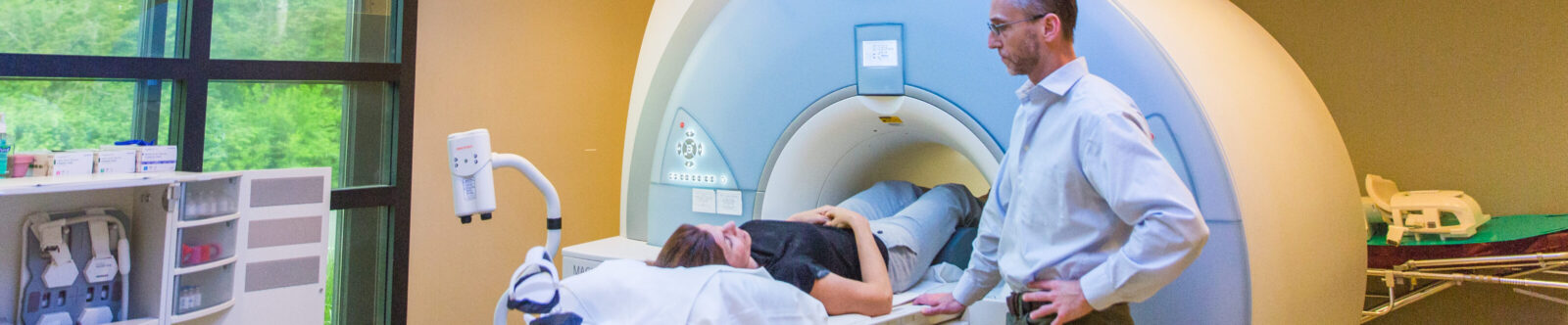
MRI
Advanced, Radiation-Free Imaging Designed for Your Comfort
Magnetic Resonance Imaging (MRI) uses a powerful magnetic field and radio waves, without any ionizing radiation, to capture detailed pictures of your soft tissues, organs, spine, and joints. Make your exam faster and more comfortable, we use AI-powered scanning technologies (SwiftMR® and Siemens Deep Resolve Boost). These tools can shorten scan times by up to 50% while preserving image quality, so you spend less time lying still.
Why Choose Advanced MRI?
- Zero radiation exposure: Uses safe magnetic technology rather than X-rays.
- Faster scans: AI-assisted imaging can shorten many exams.
- Exceptional soft-tissue detail: Displays internal structures that standard X-rays or CT scans cannot easily see.
- Continuous care & communication: Guided by specialized technologists who see, hear, and speak with you throughout your scan.
Our Specialized MRI Exams
We offer comprehensive MRI testing tailored to your specific health needs:
- Brain & Nervous System: Detailed evaluations for neurological health, memory concerns, or persistent headaches.
- Spine: Examines the spinal cord, discs, nerves, and surrounding tissues for causes of back or neck pain.
- Musculoskeletal (Joints & Muscles): Clear imaging of shoulders, knees, hips, cartilage, tendons, and muscles.
- Cardiac MRI: Specialized, radiation-free evaluation of heart muscle structure, pumping function, and prior heart damage.
- Breast MRI: High-sensitivity imaging for dense breasts, high-risk screening, newly diagnosed breast cancer or evaluating silicone implants.
- Abdominal & Pelvic MRI: Detailed views of the liver, kidneys, pancreas, uterus, ovaries, and prostate
- MR Angiography (MRA): Noninvasive imaging of blood vessels in areas such as the head, neck, chest, abdomen, and legs.
Shorter Scans & Claustrophobia Care
We understand that lying inside an MRI scanner can cause anxiety, especially if you dislike enclosed spaces or experience joint pain.
Faster scan times: Our AI software reduces scan time significantly (most exams last 20 to 45 minutes).
- Continuous communication: You are given a call button, and your technologist communicates with you between image sequences.
- Hearing protection & comfort: Cushioned padding and ear protection are provided to soften the normal tapping sounds made by the scanner.
- Extra support: If you have severe claustrophobia or anxiety, let us know when scheduling so we can discuss extra comfort options or relaxing medication with your doctor.
MRI Safety Checklist: Important Information to Share
Because MRI uses a powerful magnet, safety screening is an essential part of every visit. Please notify our team before your exam if you have:
- A pacemaker, defibrillator, or implanted cardiac deviceAneurysm clips, vascular stents, or artificial heart valves
- Joint replacements, artificial joints, or orthopedic metal hardware
- Cochlear (hearing) implants, neurostimulators, or insulin pumps
- Metal fragments in your body or eyes
- Kidney disease or history of dialysis (if IV contrast is needed)
- Possibility of pregnancy
(Many modern medical devices are MRI-compatible. Our safety team will verify your specific device before your scan, please bring your implant card if you have one.)
What to Expect Before, During, and After
How to Prepare
- Wear comfortable clothing: Choose clothes without metal zippers, snaps, or underwires.
- Remove metal items: Jewelry, watches, hearing aids, eyeglasses, and removable dental work must be removed before entering the scan room.
- Fasting instructions: Most MRI exams require no special diet, though certain abdominal or pelvic scans may ask you to fast for a few hours beforehand.
During Your Exam
You’ll lie on a padded table that moves into the scanner. Staying still helps produce clear images, and your technologist will position you for comfort.
After Your Exam
You can return home and resume your normal daily activities immediately. If IV contrast was used, drinking fluids throughout the day helps flush it naturally out of your system.
Stress Cardiac MRI
Stress Cardiac MRI is an advanced, noninvasive imaging test that evaluates your heart muscle structure, pumping performance, and blood flow without using any ionizing radiation. It provides detailed views of how your heart functions both at rest and under simulated stress conditions.
When Is Stress Cardiac MRI Recommended?
Your doctor may recommend a Stress Cardiac MRI to:
- Assess heart blood flow: Determines whether areas of your heart muscle are receiving sufficient blood flow during stress.
- Evaluate unexplained chest pain: Investigates symptoms when other tests are inconclusive.
- Examine heart muscle health: Checks for heart muscle scarring or damage following a prior heart attack.
- Avoid radiation: Provides a comprehensive option for patients who need detailed heart evaluation without X-ray radiation.
What to Expect During Your Exam
- No radiation or treadmill exercise: Rather than walking on a treadmill, a short-acting IV medication gently simulates the effect of exercise on your heart while you rest comfortably.
- Painless and supported: You lie on your back on a cushioned MRI table. The scanner makes tapping sounds while taking images, and hearing protection is provided.
- Contrast for clarity: An IV contrast agent is used to highlight blood flow through your heart tissue.
- Exam time: The exam typically takes 30 to 45 minutes, with full monitoring by your care team throughout.