
PET/CT Imaging Services
Advanced Molecular Imaging for Clearer Answers
PET/CT combines two powerful imaging tools into a single scan to give your care team a complete, clear picture of your health.
- PET (Positron Emission Tomography) shows biological and metabolic activity inside your body at the cellular level.
- CT (Computed Tomography) provides detailed 3D pictures of your organs, bones, and anatomical structures.
By evaluating both structure and cellular behavior at the same time, a PET/CT scan helps your doctors pinpoint abnormalities early and understand exactly how they are functioning.
Why Choose PET/CT Imaging?
PET/CT plays an essential role in diagnosing conditions, guiding cancer care, and evaluating brain health:
- Early detection: Can show changes that may not yet be visible on X-ray or CT.”
- Accurate staging: Helps determine whether a condition is localized or has spread to other areas.
- Monitor treatment success: Helps assess how well your current therapy or treatment is working.
- Personalized care: Helps your healthcare team select the most effective treatment path for you.
PET/CT Tracers We Offer
PET/CT uses small amounts of short-lived radioactive imaging agents (radiotracers). Different tracers highlight different types of cells:
- FDG PET/CT — Overall Cancer & Metabolic Assessment
How it works: FDG is a glucose-based tracer. Because many active or cancer cells use sugar faster than normal tissue, this scan highlights areas of increased metabolic activity throughout the body. - Cerianna® PET/CT — Estrogen Receptor Breast Cancer Imaging
How it works: Cerianna binds to estrogen receptors (ER) and is used to help evaluate estrogen receptor-positive breast cancer that has returned or spread. - PSMA PET/CT — Targeted Prostate Cancer Care
How it works: Binds to prostate-specific membrane antigen (PSMA) proteins on prostate cells, helping detect subtle areas of prostate cancer during initial staging or if PSA levels rise after treatment. - Detectnet™ PET/CT — Neuroendocrine Tumor Imaging
How it works: Targets somatostatin receptors on neuroendocrine tumors (NETs) in the digestive tract, lungs, or pancreas to guide targeted care. - Amyvid® PET — Memory & Brain Health Evaluation
How it works: Detects amyloid-beta protein deposits in the brain, helping your doctor evaluate memory loss, cognitive decline, or potential Alzheimer’s disease.
What to Expect Before, During, and After
How to Prepare
- Fasting instructions: Many PET scans (especially FDG) require fasting for several hours before your scan and drinking plain water.
- Inform us if you havediabetes: Let us know if you have diabetes so we can provide specialized instructions to manage your blood sugar on scan day.
- Medication review: Tell our team about all your current medications, especially cancer treatments or somatostatin medications.
During & After Your Visit
- IV injection: A small IV is placed in your arm to deliver the imaging tracer.
- Relaxation period: You will rest quietly in a comfortable chair while the tracer circulates naturally through your body (typically 45 to 60 minutes).
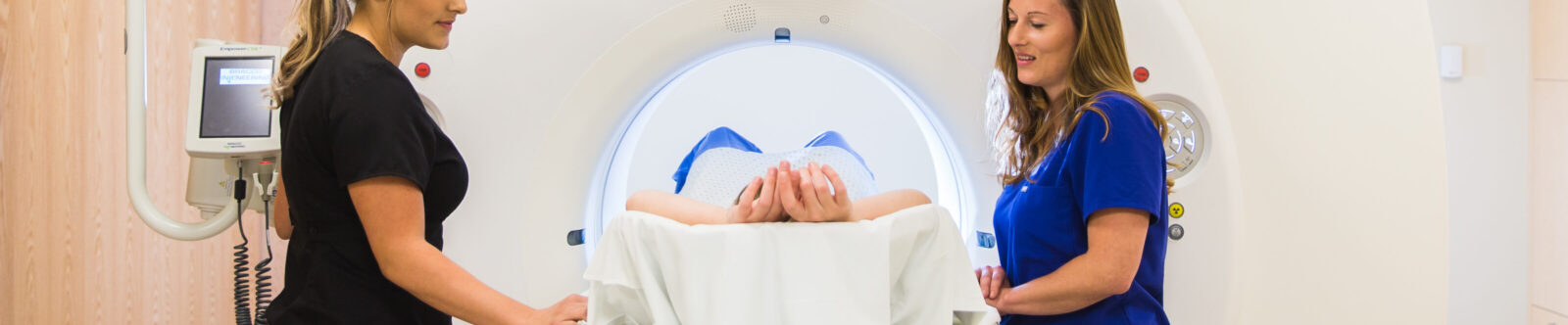
- During: You lie on a cushioned table that slides through aring-shaped scanner. The scan itself takes about 15 to 30 minutes.
- Safe return home: The tracer uses a small amount of short-lived radiation that quickly naturally fades. Drinking plenty of fluids afterward helps flush it fromyour body.
Locations
Locations for PET/CT
Squalicum Parkway
MRI, CT, PET/CT, Interventional Radiology, X-Ray & Fluoroscopy